
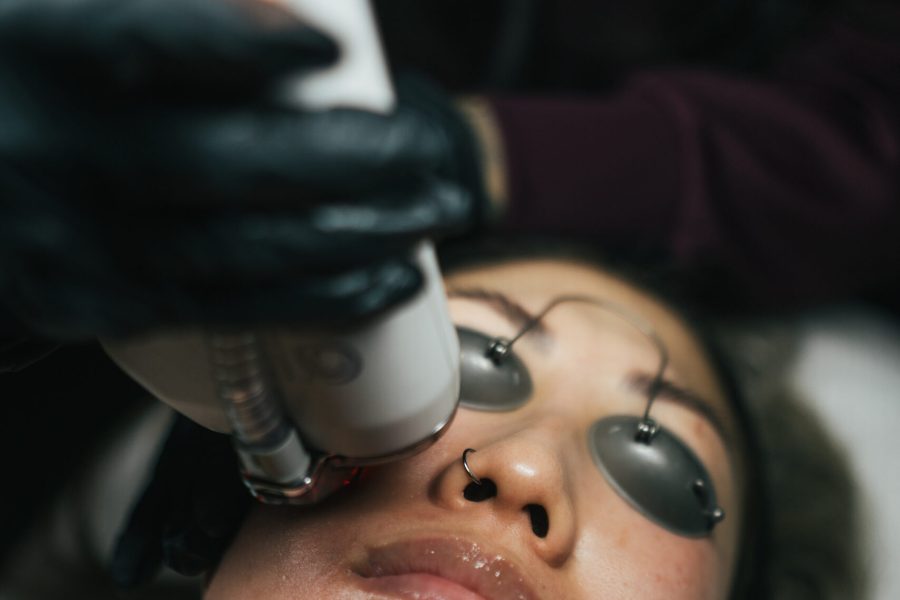
HALO™ is an FDA-cleared hybrid fractional laser with a well-established safety profile across a range of Fitzpatrick skin types when treatment parameters are appropriately calibrated by a trained clinician. The fractional delivery pattern and DTO technology reduce variability and support predictable outcomes.
Common reactions Significant redness, warmth, and swelling in the first 24–48 hours — more pronounced than lighter non-ablative treatments due to the ablative component. A sandpaper-like texture (MENDs) develops within 24 hours and sheds over 3–5 days. Skin will appear bronzed during this phase before revealing renewed surface beneath. Mild to moderate peeling and sensitivity for 5–7 days depending on treatment depth and settings.
Rare side effects Post-inflammatory hyperpigmentation — particularly in higher Fitzpatrick skin types treated at aggressive settings; prolonged redness; infection; or scarring. Risk is significantly reduced with appropriate patient selection, parameter calibration, and diligent post-care adherence.
Contraindications Active skin infection, recent isotretinoin use (within 6–12 months), active tan or significant recent sun exposure, pregnancy, certain photosensitizing medications, or a history of keloid scarring. Higher Fitzpatrick skin types require careful parameter adjustment and conservative initial approach to minimize PIH risk.
Disclosure required Inform your provider of all medications — including retinoids, photosensitizing drugs, and anticoagulants — recent sun exposure, tanning history, history of melasma or previous PIH, prior laser treatments, and any known skin sensitivities or conditions.
Results develop progressively over 4–12 weeks following treatment as MENDs shed, surface renewal completes, and deeper collagen remodeling matures. Significant improvement in tone, texture, and clarity is typically visible within 2–3 weeks. Full dermal remodeling results continue to develop over 3–6 months. Individual results vary based on treatment settings, skin type, degree of photodamage, and post-care adherence.
1. Initial consultation and skin assessment — Fitzpatrick skin typing, evaluation of photodamage, pigmentation, and texture concerns, and discussion of treatment goals, energy settings, and expected downtime.
2. Pre-treatment preparation — topical anaesthetic applied 45–60 minutes prior. Skin cleansed, marked, and treatment parameters confirmed. Pro-Nox™ nitrous oxide may be offered for additional comfort during treatment.
3. HALO™ handpiece delivered across the treatment area using Sciton’s intelligent DTO system. Dual wavelengths calibrated and delivered simultaneously. Treatment of the full face typically completed in 30–45 minutes.
4. Immediate post-treatment care — cooling applied to reduce initial heat and redness. Gentle moisturizer and physical SPF applied before the patient departs.
5. Post-care instructions provided — gentle cleanser, fragrance-free moisturizer, and strict sun avoidance for a minimum of 4 weeks. MENDs (microscopic epidermal necrotic debris) will surface and shed within 3–5 days — patients advised not to pick, rub, or exfoliate. Follow-up scheduled.
Most patients achieve desired outcomes in 1–2 treatments for moderate concerns, with deeper photodamage benefiting from a second session 4–6 weeks following the first. Annual or biannual maintenance treatments sustain and build on results over time.