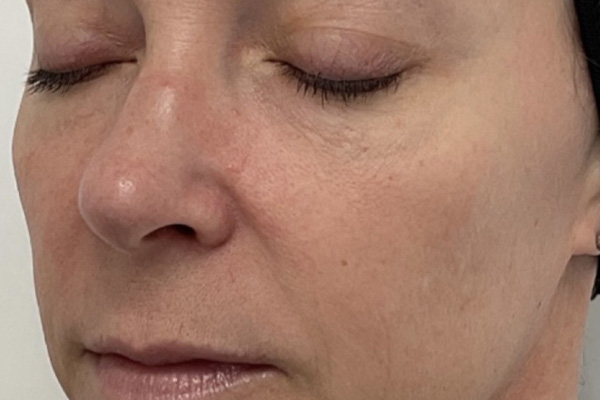
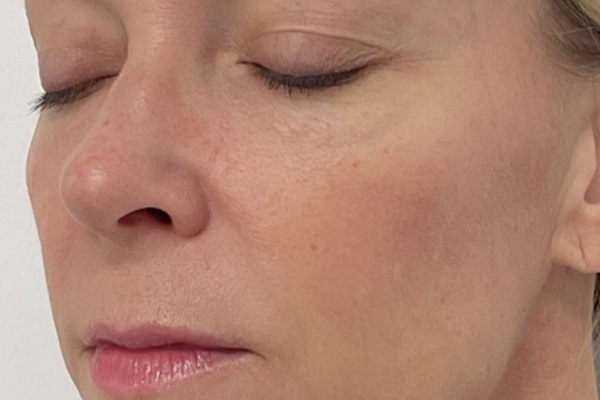
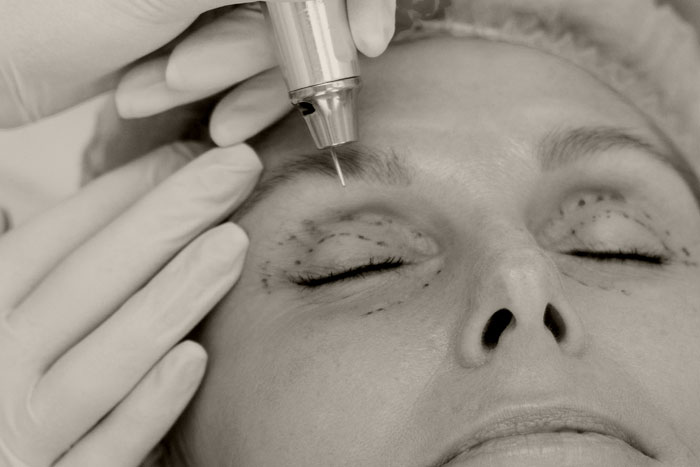
MicroLaserPeel® is a controlled ablative resurfacing treatment that precisely removes the outermost layers of damaged skin — stimulating the body's natural healing response, accelerating cell turnover, and revealing fresher, smoother skin beneath. Customizable by depth. Minimal downtime.
MicroLaserPeel® is a Sciton erbium laser resurfacing treatment that uses a 2940 nm Er:YAG wavelength to ablate the epidermis at precisely calibrated depths — ranging from 4 to 50+ microns depending on skin condition and desired outcome. At shallow depths, it functions similarly to an advanced chemical peel. At deeper settings, it delivers meaningful resurfacing with visible skin renewal.
Unlike CO2 lasers, the erbium wavelength is highly absorbed by water in skin tissue, allowing controlled layer-by-layer removal with less thermal damage to surrounding structures. This translates to faster healing, reduced risk, and a more comfortable recovery — while still triggering the collagen remodeling and epidermal renewal that produce lasting results.
MicroLaserPeel® is often positioned as the ideal step between microdermabrasion and full fractional resurfacing — or combined with ProFractional® or BBL HERO® for more comprehensive treatment.
Why choose MicroLaserPeel®?
Precision depth control Treatment depth is precisely calibrated in microns — not estimated. Every pass is metered by computer-guided technology for consistent, uniform results.
Erbium advantage The 2940 nm Er:YAG wavelength outperforms CO2 in superficial resurfacing — more effective epidermal removal with less collateral thermal damage and faster healing.
Fully customizable Depth, coverage area, and intensity are adjusted to your skin condition, lifestyle, and downtime tolerance. Each treatment is built around your goals.
Broad treatment range Addresses pigmentation, fine lines, texture, enlarged pores, acne scarring, and sun damage on the face, neck, décolletage, hands, and body
Potential benefits
Skin renewal
Ablation of the damaged epidermal layer triggers the skin’s natural healing cascade — producing fresh, healthy cells that resurface the treated area
Collagen stimulation
The controlled wound response initiates neocollagenesis, gradually improving skin firmness, structure, and elasticity over the weeks following treatment.
Pigmentation correction
Removes surface pigment irregularities — sun spots, post-inflammatory hyperpigmentation, and uneven tone — revealing more consistent color beneath.
Texture refinement
Smooths roughness, minimizes enlarged pores, and reduces the appearance of fine lines and superficial scarring with each treatment session.
Immediate tightening
Patients often notice an immediate improvement in skin tightness and texture — with continued improvement as healing progresses over 4–6 weeks.
Scalable results
Depth and intensity can be increased with subsequent treatments for progressive improvement — or maintained with lighter sessions spaced throughout the year.
Care Instructions
Read about our safety and side effects, as well as the typical treatment protocol.
1. Medical history review, Fitzpatrick skin typing, and photograph documentation of treatment area(s).
2. Discussion of depth settings, expected downtime, post-care requirements, and treatment goals.
3. Topical anaesthetic applied; skin cleansed and marked. Comfort assessed prior to treatment start.
4. MicroLaserPeel® administered by the clinician. Treated skin will appear frosted — a normal response indicating epidermal ablation. Cooling applied immediately post-treatment.
5. Protective ointment applied; written aftercare instructions provided. Follow-up appointment or next-session scheduling discussed before departure
Frequently asked Questions
How is MicroLaserPeel® different from a chemical peel?
Chemical peels use acids to dissolve the outer skin layers — depth is influenced by skin chemistry and application technique, making precision difficult. MicroLaserPeel® removes the epidermis at a computer-controlled, metered depth measured in microns. The result is more uniform, more predictable, and adjustable to your specific skin needs
What does the skin look like right after treatment?
The treated area will appear red, tight, and slightly frosted immediately following the procedure — resembling a moderate sunburn. Swelling may develop within the first few hours. Peeling typically begins on day 2–3 and concludes by day 4–7 depending on depth
How soon will I see results?
Most patients notice an immediate improvement in skin tightness and texture. Visible renewal is typically apparent within 7–10 days as the skin finishes exfoliating. Continued improvement from collagen remodeling occurs over the following 4–6 weeks.
How long do results last?
Results vary based on depth of treatment, number of sessions, and ongoing skin care and sun protection practices. Many patients maintain outcomes with periodic treatments every 6–12 months. Deeper sessions may produce results lasting 1–2 years with proper maintenance.
Is there downtime?
Yes — typically 3–5 days depending on peel depth. Most patients feel comfortable returning to normal activities and wearing makeup by day 4–5. MicroLaserPeel® is often called the “weekend peel” for its manageable recovery window.
Is it suitable for all skin types?
MicroLaserPeel® is generally safe across multiple Fitzpatrick skin types, though treatment parameters are carefully adjusted for darker skin tones to minimize hyperpigmentation risk. A thorough clinician assessment is required prior to treatment.
When to Schedule Your Treatment
Plan your treatment 2 weeks before you want results to take effect, and at least 6 weeks ahead of any special event for optimal results. Maintain your results with treatments every 3 – 36 months.