
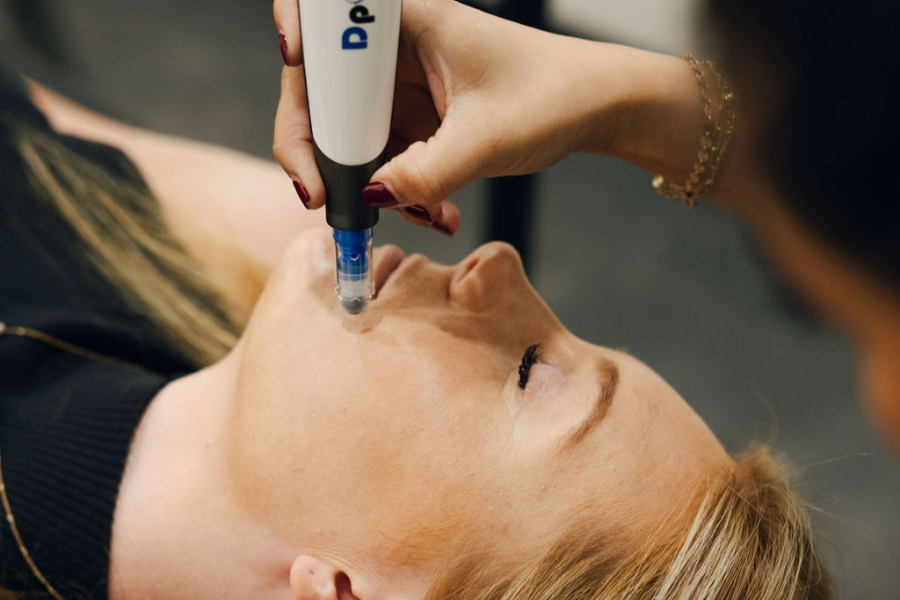
Microneedling is a well-established, broadly tolerated procedure with a strong safety profile across skin types when performed with sterile, single-use needle cartridges by a trained clinician.
Common reactions Redness, warmth, mild swelling, and skin sensitivity immediately following treatment — typically resembling a moderate sunburn. Most reactions resolve within 24–48 hours. Mild pinpoint bleeding during the procedure is normal at deeper depth settings.
Rare side effects Prolonged redness, post-inflammatory hyperpigmentation, infection, or milia formation — uncommon when sterile protocol is maintained and post-care instructions are followed. Risk increases with active skin conditions or compromised barrier function at time of treatment.
Contraindications Active acne breakouts, open wounds, or active skin infection in the treatment area; recent isotretinoin use (within 6–12 months); blood thinning medications or clotting disorders; history of keloid scarring; pregnancy; or certain autoimmune skin conditions such as psoriasis or eczema in the treatment zone. PDRN enhancement is contraindicated in patients with known fish allergies.
Disclosure required Inform your provider of all medications and supplements — particularly retinoids, anticoagulants, and photosensitizing drugs — recent procedures, history of cold sores near the treatment area, active skin conditions, known fish allergy if considering PDRN, and any previous reactions to skin treatments.
Results develop progressively over 4–8 weeks following each session as collagen remodeling matures. A series approach produces the most significant cumulative improvement. Individual results vary based on skin type, concern severity, treatment frequency, and post-care adherence.
1. Initial consultation and skin assessment — evaluation of skin type, Fitzpatrick classification, active concerns, and treatment goals. Depth settings and enhancement options discussed.
2. Pre-treatment preparation — topical anaesthetic applied 30–45 minutes prior. Skin cleansed thoroughly; all active products and makeup removed.
3. DP4 device passed systematically across the treatment area at clinician-calibrated depth settings. Exosome or PDRN enhancement applied to the skin surface during treatment for simultaneous delivery through open microchannels.
4. Post-treatment soothing serum or mask applied immediately following needling. Skin will appear red and flushed — similar in appearance to moderate sunburn.
5. Post-care instructions provided — gentle cleanser, fragrance-free moisturizer, and strict sun avoidance for a minimum of 72 hours. No active ingredients, retinoids, or exfoliants for 5–7 days post-treatment. Follow-up scheduled.
A series of 3–6 treatments spaced 4–6 weeks apart is recommended for most concerns. Acne scarring and more significant texture irregularities may benefit from additional sessions. Maintenance treatments every 3–6 months support long-term collagen activity.