
Microneedling, also known as collagen induction therapy (CIT), is a mechanical resurfacing treatment that delivers controlled dermal micro-injuries using a device equipped with fine sterile needles. Penetration depth is precisely calibrated by the clinician based on treatment area and concern, ranging from 0.5 mm for superficial skin quality work to 2.5 mm or deeper for established scarring and significant texture irregularities.
The micro-injuries initiate a three-phase wound healing cascade, inflammation, proliferation, and remodeling, that stimulates fibroblast activity, neocollagenesis, and elastin synthesis without removing or ablating the skin surface. The epidermis remains largely intact, allowing for faster recovery than ablative alternatives while still producing meaningful dermal remodeling over time.
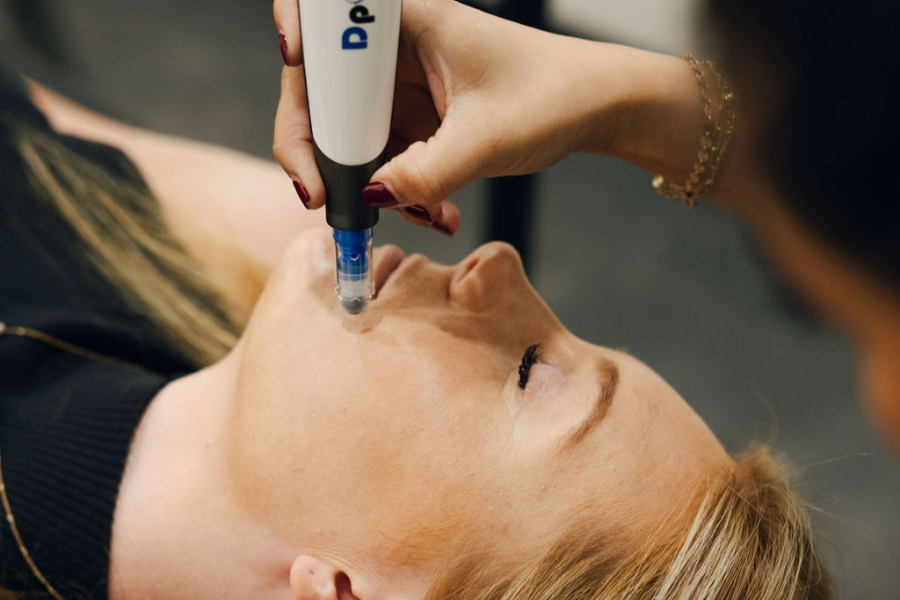
We perform all microneedling treatments using the Dermapen 4 (DP4) an FDA-cleared, fully digitalized microneedling device from DermapenWorld. The DP4 delivers precise vertical needle penetration at depths up to 3.0 mm, with speed and depth controlled digitally at the press of a button for consistent, reproducible results. Its oscillating action creates up to 1,920 microchannels per second, producing uniform channel density across the treatment area with minimal trauma to surrounding tissue. The DP4 is the only microneedling device with a dedicated Scar Treatment (ST) setting, making it particularly well-suited for acne scarring, striae, and fibrous or thickened scar tissue. Single-use sterile needle cartridges are used for every treatment, no exceptions.
Microneedling can be performed as a standalone treatment or enhanced with exosomes or PDRN applied during the procedure to amplify the regenerative response. It is appropriate across a broad range of skin types and tones and can be used on the face, neck, decolletage, and body.
Mechanical, Not Thermal Microneedling achieves dermal remodeling through precise physical stimulation rather than heat or laser energy, making it suitable for patients who are not candidates for energy-based treatments or who prefer a non-thermal approach.
Depth-Adjustable Precision Needle penetration depth is calibrated to the treatment area and concern, allowing the clinician to target superficial skin quality, mid-dermal texture, or deeper scar tissue within a single session.
Broad Skin Type Compatibility Without the thermal component that increases hyperpigmentation risk in higher Fitzpatrick skin types, microneedling is one of the most inclusively appropriate resurfacing options available.
Enhanced Topical Delivery Microchannels created during treatment temporarily increase skin permeability, allowing exosomes, PDRN, PRF, or growth factor serums applied during or immediately after the procedure to penetrate far more effectively than surface application alone.
Controlled micro-injuries stimulate fibroblast activity and the production of new collagen and elastin, improving skin firmness, bounce, and structural integrity over a series of treatments.
Progressive dermal remodeling smooths rough, uneven skin texture, reducing the appearance of enlarged pores, superficial scarring, and irregular surface quality.
Accelerated cell turnover and improved dermal density contribute to a brighter, more even complexion, reducing dullness and improving overall skin quality.
Topicals applied during treatment , including hyaluronic acid, growth factor serums, exosomes, or PDRN, penetrate the dermal layer through open microchannels for amplified results beyond surface application.
Neocollagenesis and elastin synthesis gradually reduce the appearance of fine lines and superficial wrinkles, particularly in areas of skin laxity and thinning.
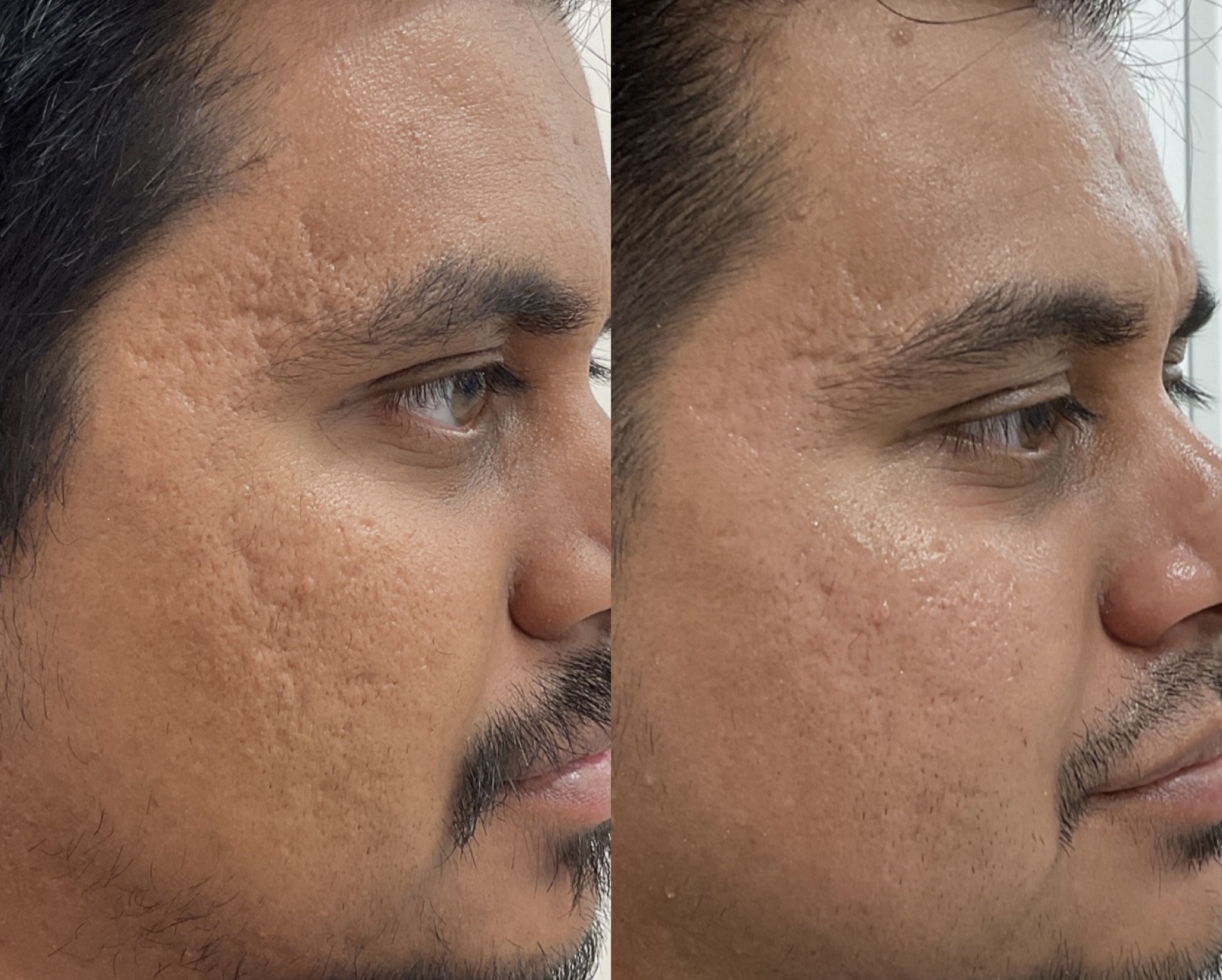
Disrupts fibrous scar tissue and stimulates organized collagen replacement, improving the appearance of acne scars, surgical scars, and stretch marks over a treatment series.
Read about our safety and side effects, as well as the typical treatment protocol.
We use the Dermapen 4 (DP4), an FDA-cleared, fully digitalized microneedling device from DermapenWorld. The DP4 delivers precise, computer-controlled needle penetration at clinician-selected depth and speed settings, with a dedicated Scar Treatment setting for more advanced scar revision work. A sterile, single-use needle cartridge is used for every patient and every session.
We offer two regenerative enhancement options exosomes and PDRN, both applied through the open microchannels created during treatment for deeper dermal penetration than topical application alone achieves. Exosomes deliver stem-cell derived growth factors that amplify the healing and collagen response. PDRN provides DNA-based cellular repair support, improving hydration, elasticity, and tissue regeneration. Your clinician will advise on which enhancement is best suited to your skin concerns and goals.
Laser resurfacing uses targeted light energy to thermally remodel or ablate skin tissue , achieving significant results but carrying greater downtime and higher risk for certain skin types. Microneedling achieves dermal stimulation through precise mechanical injury without heat, offering a broadly tolerated alternative with a gentler recovery profile and no thermal risk.
With topical anaesthetic applied prior to treatment, most patients describe microneedling as a mild pressure or vibrating sensation rather than pain. Sensitivity varies by treatment area the forehead and bony prominences tend to be more sensitive than the cheeks. Deeper depth settings produce more sensation.
Initial improvement in skin texture and radiance is often noticeable within 2 weeks as the skin heals and early collagen activity begins. More significant changes in firmness, scarring, and tone develop progressively over 8 weeks following each treatment.
Most patients benefit from a series of 3–6 treatments spaced 4–6 weeks apart. Acne scarring and significant texture concerns typically require the higher end of that range. Maintenance sessions every 3–6 months support ongoing collagen activity and skin quality
Microneedling is one of the most broadly appropriate resurfacing treatments available u2014 suitable across all Fitzpatrick skin types including darker tones, where thermal treatments carry greater pigmentation risk. A thorough consultation ensures appropriate depth settings and timing relative to any active skin concerns.
Plan your treatment 2 weeks before you want results to take effect, and at least 6 weeks ahead of any special event for optimal results. Maintain your results with treatments every 2 – 4 months.