
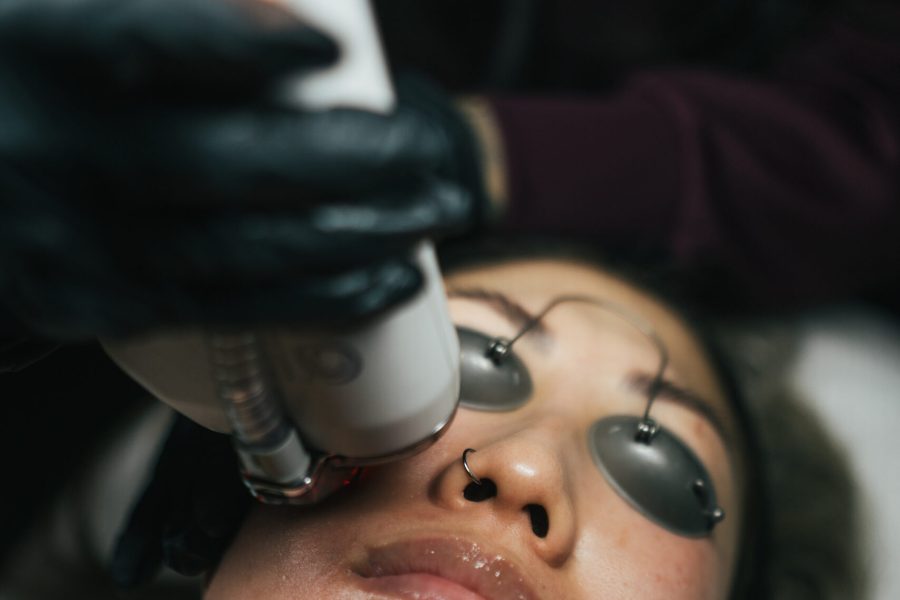
HALO™ is a Sciton hybrid fractional laser that delivers two wavelengths simultaneously through the same handpiece — a 1470 nm non-ablative wavelength and a 2940 nm ablative wavelength — in a fractionated pattern across the treatment area. This dual-wavelength delivery targets two distinct depths of skin in a single pass: the non-ablative energy penetrates the dermis to stimulate collagen remodeling and address deeper pigment and vascular irregularities, while the ablative energy removes the outermost epidermal layer within each treatment zone to drive surface renewal and accelerate the elimination of visible damage.
The fractional delivery pattern means only a precise percentage of the skin surface is treated at each pass — leaving surrounding tissue intact to support faster healing than fully ablative resurfacing. Treatment depth, ablative percentage, and energy levels are individually calibrated using Sciton’s intelligent Dynamic Thermal Optimization (DTO) technology, which continuously monitors and adjusts energy delivery in real time to maintain consistent, controlled results regardless of handpiece speed or movement variation.
HALO™ occupies a clinically meaningful position between lighter non-ablative treatments — such as MOXI™ — and more aggressive fully ablative resurfacing. It delivers the surface renewal and pigment correction of an ablative treatment alongside the dermal collagen stimulation of a non-ablative treatment, in a single session with a manageable recovery window.
Two wavelengths. One treatment. No other fractional laser addresses superficial epidermal damage and deeper dermal remodeling simultaneously in a single calibrated pass. HALO™ compresses what would otherwise require two separate procedures into one cohesive treatment session.
Intelligent energy delivery Sciton’s Dynamic Thermal Optimization technology continuously adjusts energy output in real time — ensuring consistent, uniform treatment across the entire area regardless of handpiece variation. Precision is built into the device, not dependent solely on technique.
Customizable to your skin and goals Treatment depth, ablative percentage, and energy levels are individually calibrated at each visit — allowing HALO™ to be dialed in for patients seeking subtle progressive improvement or more significant single-session correction.
Broad applicability Addresses a wide range of photodamage, pigmentation, textural, and early laxity concerns across multiple Fitzpatrick skin types, on the face, neck, décolletage, hands, and arms.
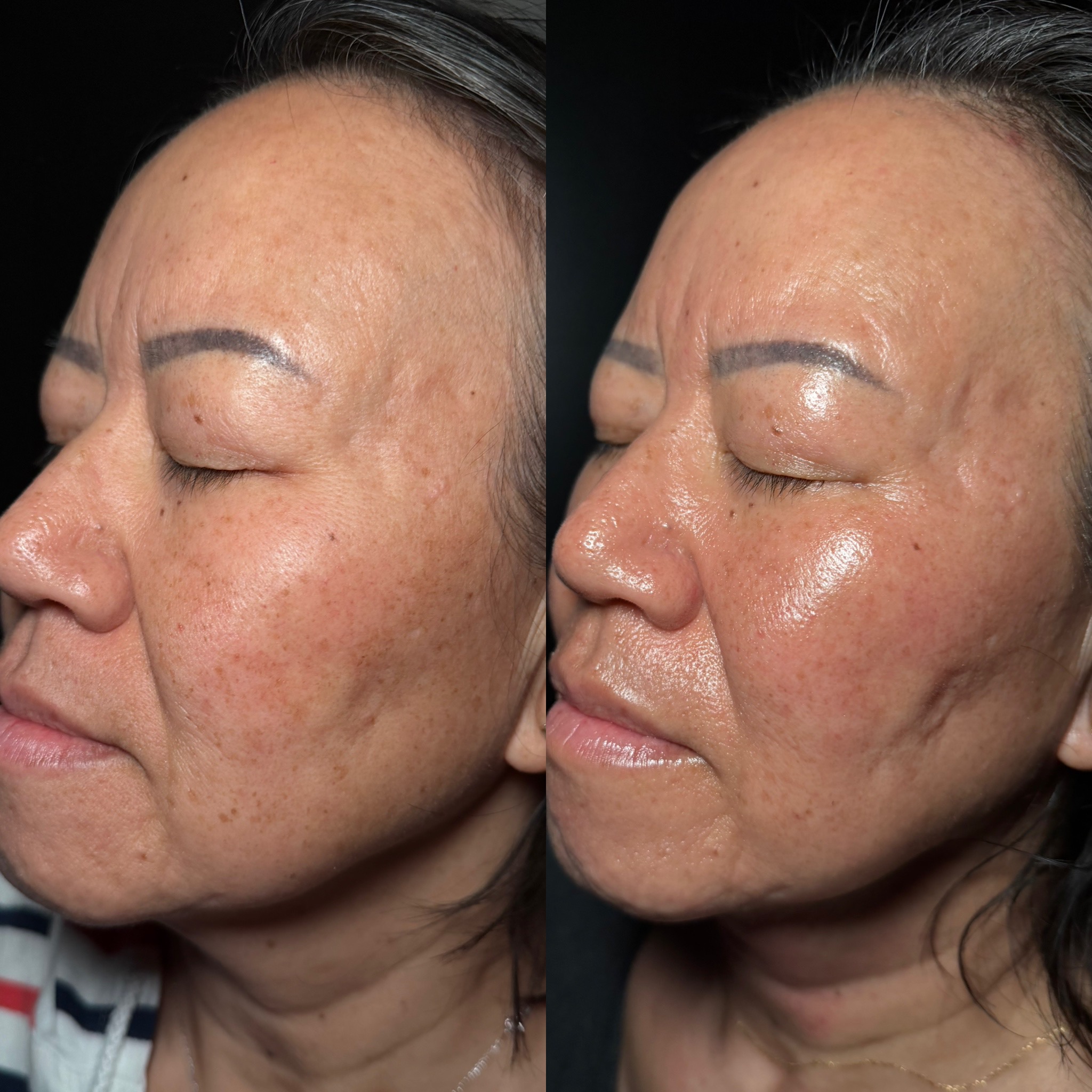
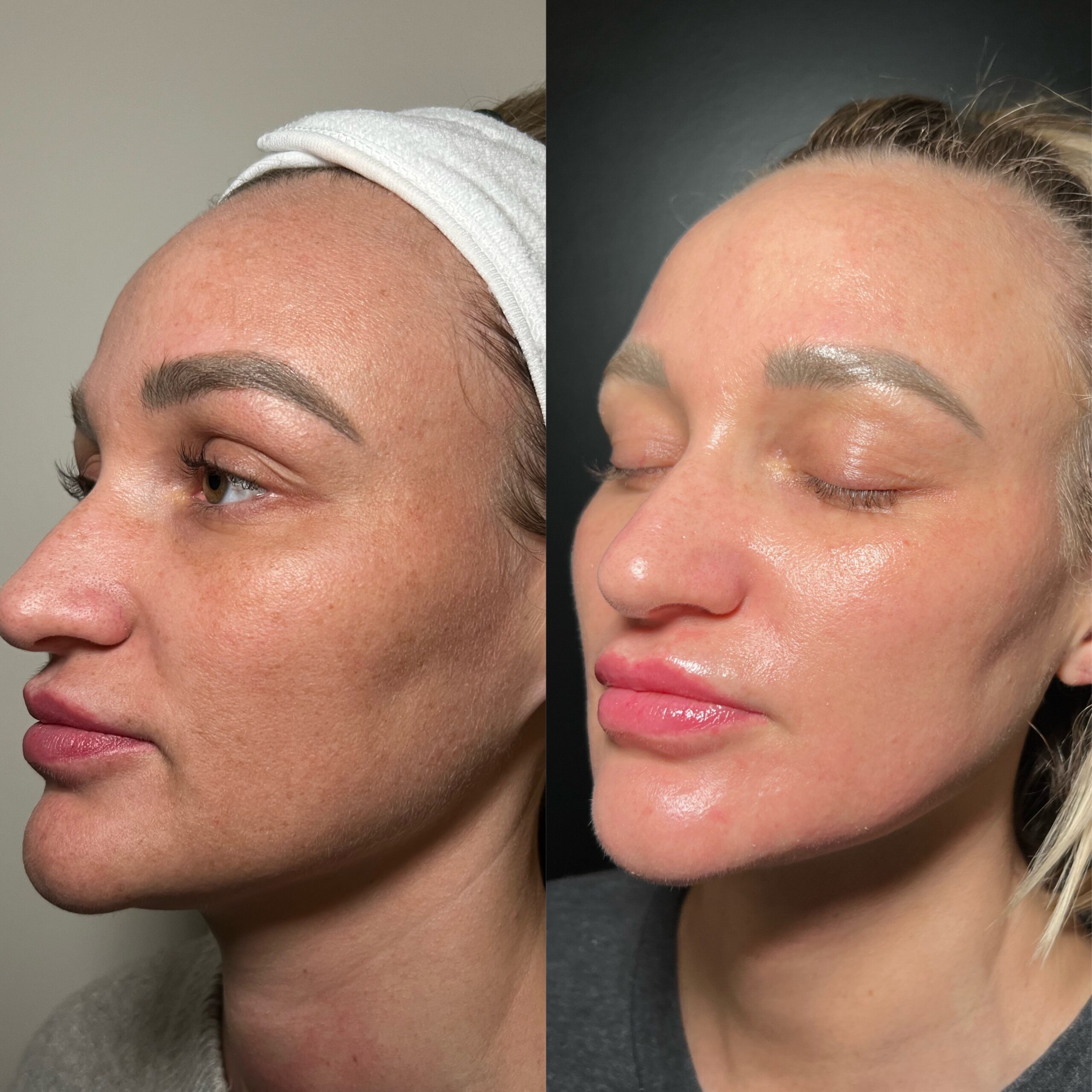
The non-ablative wavelength targets melanin-containing cells and deeper dyspigmentation, while ablative energy removes damaged surface pigment, producing significant, progressive correction of sun spots, post-inflammatory hyperpigmentation, and uneven tone.
Ablative fractional energy removes the damaged epidermal layer within treatment zones, triggering surface renewal and revealing fresher, more even skin as healing progresses.
HALO produces some of the most significant tone correction available from a fractional laser, reducing the cumulative appearance of sun damage, freckling, and diffuse discoloration for a more uniform, luminous complexion.
Deep collagen induction and dermal remodeling contribute to improvements in skin firmness and elasticity, particularly in patients with early signs of laxity and tissue thinning.
Combined dermal remodeling and epidermal renewal produce progressive improvement in surface texture, pore appearance, and overall skin quality, particularly effective for patients with rough or uneven skin.
The non-ablative 1470 nm wavelength drives deep dermal collagen stimulation, neocollagenesis that improves skin density, firmness, and structural resilience over the weeks and months following treatment.
Read about our safety and side effects, as well as the typical treatment protocol.
1. Medical history review, Fitzpatrick skin typing, and photograph documentation of treatment areas.
2. Discussion of energy settings, expected MENDs response, downtime, post-care requirements, and treatment goals.
3. Topical anaesthetic applied; skin cleansed and prepped. Comfort options confirmed before treatment begins.
4. HALO treatment delivered by the clinician. A warm, prickling sensation with intermittent heat pulses is typical during the procedure u2014 comparable in sensation to a hot stone passing over the skin.
5. Cooling applied post-treatment; gentle moisturizer and mineral SPF applied before departure. Written aftercare and follow-up scheduling provided.
Both use Sciton fractional technology, but MOXI™ is non-ablative only — it does not remove the skin surface. HALO™ combines non-ablative and ablative wavelengths in a single treatment, delivering deeper correction, more significant pigment elimination, and greater surface renewal. MOXI™ is better suited for early photodamage, prevention, and minimal downtime. HALO™ addresses more established sun damage, texture concerns, and patients ready for more meaningful single-session correction with a longer recovery window.
MENDs — microscopic epidermal necrotic debris — are the treated epidermal cells that rise to the skin surface as part of the healing process. They present as a bronzed, rough, or sandpaper-like texture that sheds naturally over 3–5 days. They are a normal and expected sign that the treatment is working — not a side effect or complication. Patients are advised not to pick, rub, or mechanically exfoliate during this phase.
Most patients experience 5–7 days of noticeable recovery — including redness and swelling in the first 48 hours, followed by the MENDs phase lasting 3–5 days. Mineral makeup can typically be worn by day 5–7. Social downtime varies by settings — deeper treatment parameters extend recovery. Planning around a low-visibility week is recommended for most patients.
How soon will I see results? Initial improvement in tone and texture is often visible within 7–10 days once MENDs have shed and surface healing is complete. Continued improvement from collagen remodeling and deeper pigment elimination develops progressively over 4–12 weeks, with full results typically apparent at the 3-month mark.
How soon will I see results? Initial improvement in tone and texture is often visible within 7–10 days once MENDs have shed and surface healing is complete. Continued improvement from collagen remodeling and deeper pigment elimination develops progressively over 4–12 weeks, with full results typically apparent at the 3-month mark.
HALO™ can be performed on higher Fitzpatrick skin types when treatment parameters are conservatively calibrated by an experienced clinician. A thorough consultation, conservative initial settings, and diligent pre- and post-care sun protection are essential. Patients with a history of melasma or PIH require specific consideration prior to treatment.
Yes — HALO™ is commonly performed alongside BBL HERO® in a single session for comprehensive photodamage correction addressing both pigment and vascular concerns simultaneously. It can also be sequenced with neuromodulators, dermal fillers, and biostimulators as part of a broader treatment plan. Your clinician will advise on appropriate sequencing and timing.
Plan your treatment 2 weeks before you want results to take effect, and at least 6 weeks ahead of any special event for optimal results. Maintain your results with treatments every 3 – 6 months.